
 We are living through a time of change. And every major change we live through is accompanied by a psychological or emotional transition.
These are different from changes in several important ways.
.
What are the differences?
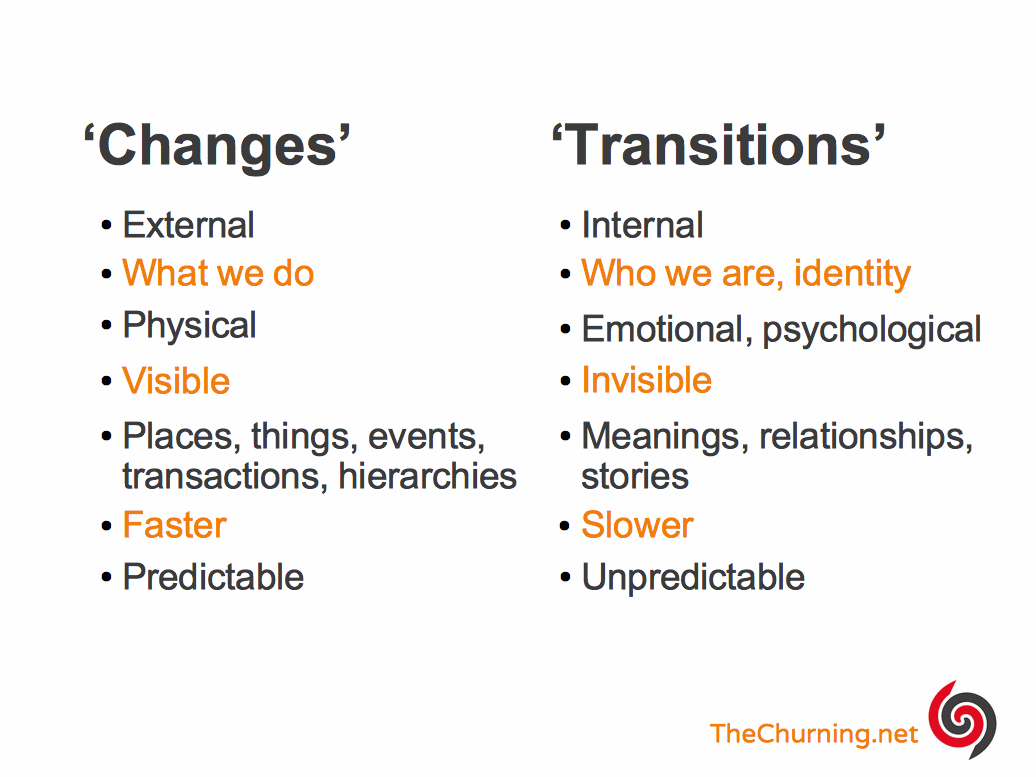
Changes happen in our outer world: they are about starting or finishing a project, role, or activity.
Transitions happen in our inner world: they are about the impacts these changes have on our thoughts, feelings, and emotions.
Changes involve places, things, transactions, events, and hierarchies.
Transitions are about meaning, identity, relationships, and stories.
Changes are visible, tangible.
Transitions are invisible, intangible.
Changes can happen quickly.
Transitions can take a long time to work through.
All of which means that changes are predictable. And transitions can be highly unpredictable.
For example, following an acquisition, Jane and her team found themselves with new reporting lines on the organisation chart. The changes they were being asked to implement were relatively straightforward: they could easily take on the new priorities, technologies, and performance metrics they were being asked to adopt.
But what really mattered to the team was the impact on their identities:
- Would their work still be as important to the strategy of the firm?
- Would they be as closely involved with the key decision-makers in the leadership team?
- How would their status in the industry and jobs market be affected?
All these issues were invisible, so nobody was talking about them, let alone managing them. But these were the issues that mattered to the team. And these were the issues that would ultimately determine the success or failure of the acquisition.
As the change guru William Bridges puts it:
“It isn’t the changes that do you in, it’s the transitions.”
Going through a change that you tell yourself will make you smarter, increase your status, or make you more popular is a completely different experience from living through the same change while telling yourself that it will make you look stupid, reduce your status, or make you less well-liked.
The emotional and psychological transitions that come with the changes in our lives matter more than the changes themselves. That’s just the way it is.
Understanding this is another big step towards becoming antifragile.
When was the last time you experienced a major change in your life? Was it the physical changes you found difficult or the emotional impacts? Are you or the people around you going through any big changes at the moment? Is anyone managing the transitions that are also happening?
Adapted from The Churning, Inner Leadership: a framework and a set of tools for building inspiration in a time of change.
You can sign up to daily posts here.
You can buy the book here and the workbook here.
(And remember: you can’t learn to swim just by reading about swimming, you also need to do the practice.)
Photo By Stig Nygaard via StockPholio.net